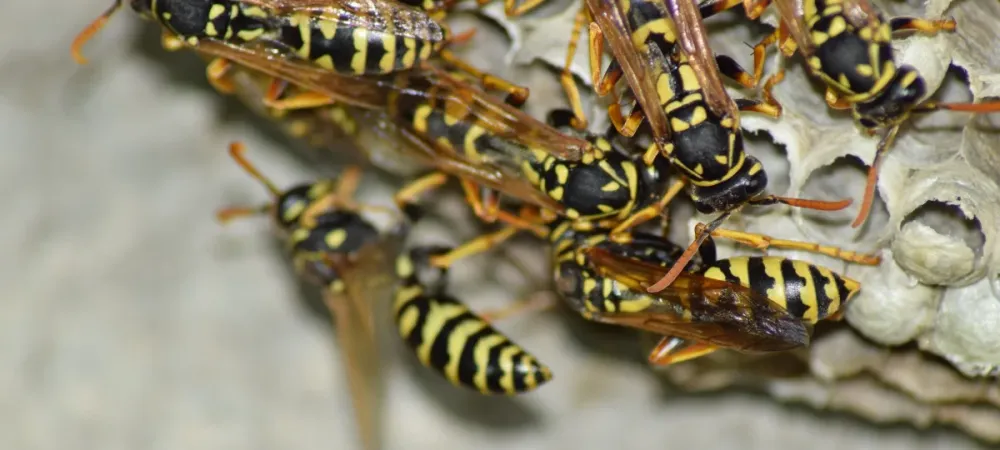
In late summer, yellowjackets in Tumwater tend to become more aggressive. Their nests are often found near homes, creating serious risks for families. Without early detection, stings and allergic reactions are more likely. Ignoring a yellowjacket nest may lead to damage to your siding, walls, or yard.
In this guide, we’ll show you where yellowjackets usually nest, how to tell if you’re near an active yellowjacket nest, and how to differentiate them from paper wasps and hornets. We’ll also discuss what makes yellowjackets dangerous and help you determine when it’s time to call in professionals to deal with your unwelcome guests.
Key Takeaways:
- Yellowjackets typically build nests underground, in wall voids, or under eaves.
- If you see yellowjackets often or hear buzzing near your home, there may be a nest nearby.
- Yellowjackets can quickly become aggressive when threatened. They can sting you multiple times, which can be fatal.
- Professional pest control is the safest and most effective option for nest removal.
Common nesting spots for yellowjackets in Tumwater
Yellowjackets in Washington tend to build nests in both above-ground and underground locations. They’re among the most aggressive stinging insects around Tumwater homes. Here are some of the most common places you might find a yellowjacket nest:
- Underground burrows: Many yellowjackets build nests in the ground, often using abandoned rodent holes or loose soil. If you see wasps flying in and out of a small hole in your yard, there’s likely a hidden nest below.
- Wall voids and crawl spaces: Yellowjackets sometimes enter through small entry points around siding, vents, or eaves and build nests inside walls or attics.
- Eaves and overhangs: Paper wasps and hornets tend to nest here, too, but a round, enclosed paper hornet nest tucked into a corner could belong to yellowjackets or bald-faced hornets.
- Bushes, trees, and sheds: Any shaded, quiet area can become a nesting site for yellowjackets
How to identify a yellowjacket nest
Here are signs you might be near an active yellowjacket nest:
- Frequent wasp traffic: Seeing wasps flying in and out of a single location repeatedly is a strong indicator of a nest.
- Buzzing sounds: A consistent buzzing near a wall, ceiling, or vent might suggest activity within.
- Aggressive behavior: Yellowjackets are more territorial than most stinging insects and often become aggressive when you get close to a nest.
- Visible nest structure: Some yellowjackets build nests in hidden spots, while others nest out in the open. A gray, papery structure the size of a basketball or larger is often a mature yellowjacket or hornet nest.
Yellowjackets vs. paper wasps and hornets
It’s easy to confuse yellowjackets with other wasps and hornets, but each builds slightly different nests:
- Paper wasps create umbrella-shaped nests with open combs that are often visible under eaves or railings.
- Bald-faced hornets are a type of Vespula (yellowjacket) and build large, enclosed paper nests often found in trees or on buildings.
- Yellowjackets typically nest in the ground or hidden areas and will defend their nests if disturbed.
Dangers of yellowjacket nests
Yellowjackets can pose serious risks to Tumwater homeowners:
- Multiple stings: Unlike honey bees, yellowjackets can sting repeatedly. Yellow jacket stings are painful and dangerous for those with allergies.
- Nest expansion: If left untreated, a small nest can turn into a large infestation by late summer.
- Pet safety: Pets can easily disturb ground nests and end up getting stung.
- Pollinators at risk: Though yellowjackets are predators, they can compete with beneficial pollinators like honey bees and bumble bees.
Why professional pest control matters
Attempting DIY yellow jacket nest removal can be dangerous. Sprays and traps often fail to reach the core of the nest, especially those hidden in walls or underground. At PCI Pest Control, our trained exterminators:
- Locate the nest, even if it’s hidden in crawl spaces or wall voids
- Use safe, targeted insecticide treatments to eliminate the colony
- Remove the nest when possible to prevent re-infestation
- Offer preventative pest management to keep wasps and hornets from returning
At PCI Pest Control, we understand how important it is to protect your home while keeping helpful pollinators safe. Our pest control services target stinging insects like yellowjackets without harming bees or beneficial bugs.
We serve Tumwater, Olympia, and nearby areas in Thurston County. Our no-contract services make it easy for you to get help when you need it, without having to lock into a long-term commitment.
If you’re seeing yellowjackets around your home, don’t wait until someone gets stung.
Contact us today or request a free quote. We’ll remove yellowjackets safely so you don’t have to worry about getting stung.
FAQs
What time of year are yellowjackets most active in Tumwater?
Late summer is the peak season for yellowjackets. Their colonies are largest from August through September, making them more noticeable and aggressive.
How do I know if a yellowjacket nest is in my wall?
If you hear a constant buzzing sound or see wasps entering a small hole in your siding, roofline, or vent, there could be a nest in the wall void. These nests may contain hundreds of wasps and developing larvae.
Should I try to remove a yellowjacket nest myself?
No. Yellowjackets are highly aggressive and can sting multiple times. DIY methods often miss the core of the nest, and misusing pesticides can exacerbate the problem. It’s safer to hire a licensed exterminator who knows how to handle stinging insect infestations.
 to walk you through your pest control plan.
