If you’ve lived in McKinney long enough, you already know that summers can come with more than just scorching heat and the occasional trip to Dallas. Around this time, it’s common to see an uptick in stinging insects acting more aggressively than they did just a few weeks earlier.
And you’re not imagining it.
From our years providing pest control services in the McKinney area and other parts of North Texas, we’ve seen it happen like clockwork.
Here’s what’s behind their aggression, and what you should do if a swarm has taken over your eaves, gutters, or garages.
Key Takeaways
- Stinging insects act more aggressively in McKinney during summer because their nests get bigger and harder to protect.
- Hot weather and dry conditions make wasps more active and push them toward food and water near your home.
- Wandering wasps later in the season are more likely to sting and cause serious allergic reactions in some people.
- Calling a pest control company is the safest way to handle nests and prevent more pest problems around your home.
It’s Peak Nest Expansion Season
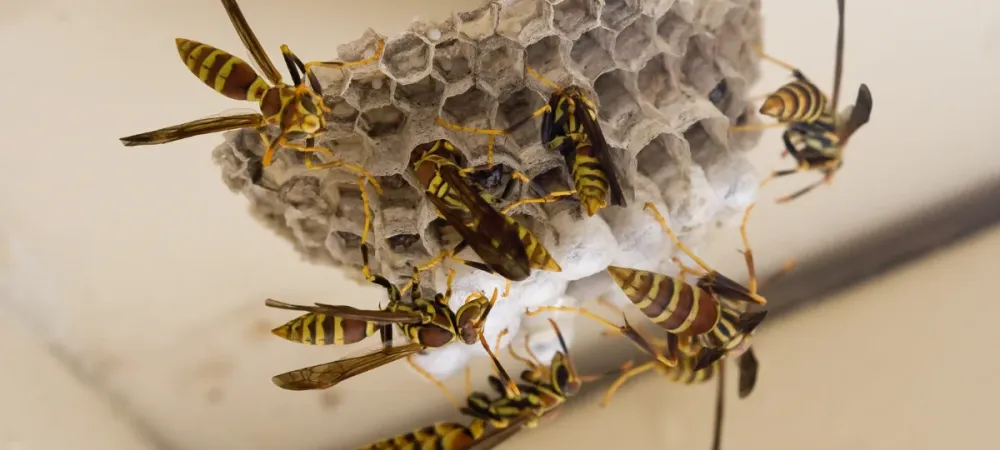
In spring, most stinging insects are in the early phases of nest-building. But by June, those paper wasps or hornets have already built nests, and colonies are in full expansion. That means more worker wasps, more brood to protect, and a stronger instinct to defend the nest—even if you’re just walking past it.
Different species of wasps behave differently, but most share one thing in common this time of year: increased territorial behavior.
Food Sources Are Scarce and Competitive
As colony demands grow, stinging insects shift their focus from nectar to protein and sugar, two food sources that overlap with your picnic table or trash bin. And if you’re grilling in the backyard, expect company. Foraging workers, especially from yellow jacket nests, are known to crash outdoor meals and defend what they find.
This makes accidental stings more likely, especially when they’re crawling around soda cans, meat scraps, or fruit.
Hot Texas Weather Ramps up Activity
Heat fuels movement. Insects like wasps are cold-blooded and become more aggressive when temperatures rise. That’s exactly what happens across McKinney and the surrounding areas during summer. With temperatures routinely in the 90s, these insects are on high alert and fast to respond to anything they see as a threat.
Even just brushing past a bush or reaching into a wall void where a nest is hidden can result in painful stings.
Water Shortages Drive Them Closer
With the hot and often dry summer weather in McKinney, wasps start looking for water. If you’ve got sprinklers, bird baths, or a pool, it can draw them in. These aren’t casual visits. They’re survival missions. And they’re not in the mood to share.
When competition for water increases, territorial behaviors increase too, especially among paper wasps and other aggressive species of wasps.
End-Of-Cycle Changes Bring Unpredictable Behavior
Later in the stinging insect season, many wasps no longer serve the colony and start to wander. They’re more erratic and unpredictable. These aging foragers are less focused on pollination or food gathering, and more likely to sting when disturbed.
This can make summer and early fall the most dangerous time for severe allergic reactions in people sensitive to insect venom.
What to Do if You Have Aggressive Stinging Insects on Your Property
If aggressive stinging insects have started showing up around your home, especially near gutters, eaves, or garages, don’t rush in. There’s a right way to handle the situation, and it starts with knowing what not to do.
Observe From a Safe Distance
You might see wasps entering a crack near your roofline or vanishing into a wall void. That’s a clear sign of a nesting site. Whether they’re paper wasps, hornets, or another type of wasp, you should avoid that area entirely and let professionals take a look.
Wasps often build nests in hard-to-spot areas: inside gutters, under eaves, even tucked into garage rafters. Attempting to inspect these yourself can turn a minor issue into a full-blown infestation.
Don’t Block or Seal off Access Points
A common mistake we see is homeowners sealing up an active nest entrance. This usually makes things worse. Trapped stinging insects may chew through building materials or enter the home in search of another way out.
Especially in cases where nests are hidden in wall voids or attics, this can lead to additional pest problems.
Remove Attractants if Possible
To reduce activity while waiting for pest control, limit food and water access. Secure trash cans, pick up fallen fruit, and keep pet food indoors. Wasps and yellow jackets are quick to find exposed food, and that can increase your risk of getting stung.
Cleaning up these wasp attractants also discourages other common pests in McKinney like cockroaches, fire ants, or carpenter bees, none of which you want joining the party.
Avoid DIY Extermination Attempts
DIY pest control often leads to more aggression.
When you use store-bought sprays, you may stir up a swarm without killing the nest. And unlike trained professionals, most residents don’t have the gear or knowledge to handle nests inside wall voids or high up near eaves.
If someone in your home is prone to allergic reactions, or worse, severe allergic reactions, the risk just isn’t worth it.
Call a Professional Pest Management for Help
Licensed pest control technicians don’t just remove wasp nests. They assess your entire property for pest risks, species identification, and nest locations. At PCI Pest Control, we use safe and effective methods tailored to your home and the type of wasp present.
From routine follow-ups to year-round stinging insect control, our extermination services are designed to keep your home pest-free, without the need for contracts.
We also handle other pest threats like termites, bed bugs, and even commercial pest control if you run a business in McKinney or the surrounding areas.
Reach out today to schedule a visit, and we’ll make sure your home is protected, so you can enjoy the rest of the summer without dodging stingers.
 to walk you through your pest control plan.
