You open the attic door and hear a faint buzzing. On the window frame, shield-shaped bugs cling to the glass. If this sounds familiar, you may have a stink bug infestation in your Tacoma home.
As temperatures drop, brown marmorated stink bugs slip indoors. They use tiny gaps, gather in attics, and hide until spring. They don’t bite, but they smell and stain, and their pheromones can attract even more into your Tacoma attic.
For Tacoma and Western Washington homeowners, fall brings stink bugs. Knowing prevention and what to do after they get in makes all the difference.
This guide covers why stink bugs invade Tacoma attics, how to spot the signs, and how to get rid of them. We also explain when professional stink bug control in Tacoma is the best move.
Key Takeaways
- Stink bugs get into Tacoma homes through gaps near doors, windows, and attic vents.
- The brown marmorated stink bug is an invasive species that is spreading in Western Washington.
- DIY soapy water helps a few, but pheromones can grow an infestation fast.
- Professional pest control seals entry points and uses safe, targeted treatments.
Why stink bugs invade Tacoma homes
Most stink bug problems start when the weather cools. In Western Washington, fall sends them looking for warm, safe spots to spend winter. Attics, crawl spaces, and wall voids are common hideouts.
The brown marmorated stink bug is Tacoma’s most common stink bug. It came from Asia and spread across the U.S. as an invasive pest. With few natural predators here, numbers grow fast across Puget Sound each year.
These pests sneak inside using tiny gaps. They feel along cracks with their antennae and slip into homes. After one finds a good spot, it releases pheromones that can turn a few bugs into hundreds.
How to recognize a stink bug infestation
One stink bug doesn’t prove an infestation. Seeing them often near windows, the attic, or outlets means they’ve likely settled in.
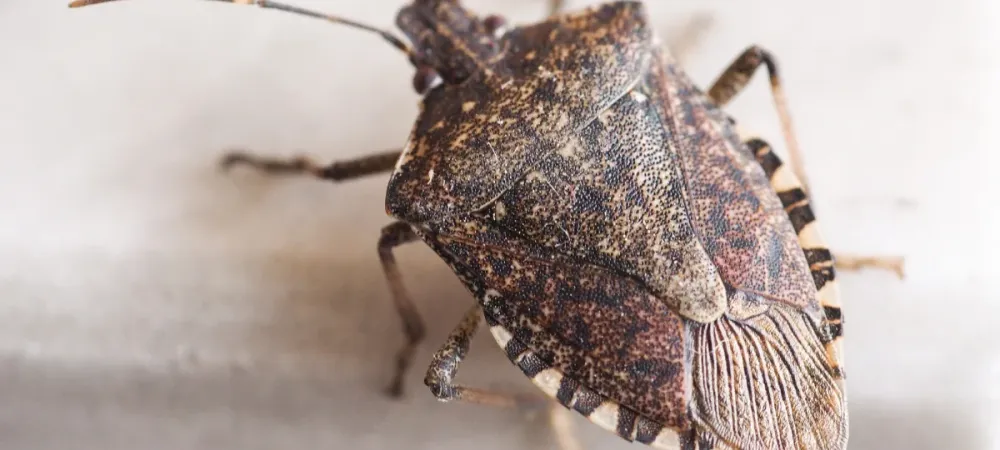
Brown marmorated stink bugs are shield-shaped, about the size of a dime, and mottled brown. Look for striped antennae. They seem slow in winter, but warm days make them active as they try to leave hiding spots.
Smell is another clue. When crushed or stressed, stink bugs release a strong odor that lingers for a long time. If you notice this smell in attics or living spaces, more are likely nearby.
Nymphs (juveniles) hatch in summer and look different from adults. They’re smaller, lighter, and lack whole wings. Seeing many nymphs outdoors can signal a larger local population.
Do stink bugs cause damage?
Unlike bed bugs, stink bugs don’t feed on people or pets. Indoors, they’re a nuisance. Outdoors, they damage gardens, fruit trees, and crops by piercing plant surfaces and sucking juices, which leaves blemishes.
Inside homes, stink bugs don’t chew wood or spread disease, but they stain and smell. They can also trigger allergies in individuals who are sensitive to them. Large numbers make them a frustrating household pest.
Ways to get rid of stink bugs in Tacoma
You may feel tempted to squash stink bugs when you first notice them in your attic. Avoid squishing. It releases an odor that can attract more stink bugs.
A safer approach is to drop them into a container of soapy water. The soap breaks down their protective coating and kills them quickly. A handheld vacuum is another option, though you’ll want to empty it immediately to avoid spreading the smell.
For larger infestations, prevention is just as important as removal. Seal gaps with caulk or weatherstripping around windows, screens, doors, and attic vents. Check siding, door frames, and rooflines for tiny openings.
Professional stink bug control in western Washington
Tacoma’s mild, coastal climate is ideal for overwintering stink bugs. Without action, they return each year. Professional pest control often delivers the best long-term relief.
PCI Pest Control checks entry points and activity first. Then we use family-friendly treatments to get rid of stink bugs. Unlike over-the-counter sprays, our methods reach hidden bugs in attics, wall voids, and other hard-to-reach areas.
We also recommend ongoing prevention: seal foundation cracks, improve window screens, and add weatherstripping. These steps help stop repeat infestations.
Why stink bugs thrive in the Pacific Northwest
Western Washington’s mild winters give stink bugs food and shelter outdoors. When it gets cold, they use homes to overwinter. This pause in activity, known as diapause, helps them survive until the spring.
Brown marmorated stink bugs have few strong predators in this area. Birds and spiders eat some, but not enough to slow them down. That’s why infestations spread from Seattle to Tacoma and beyond.
Entomologists at Washington State University (WSU) continue to study stink bug populations and their impact on agriculture. For homeowners, this research reinforces one point: these pests are here to stay, and prevention is the best defense.
Making the right choice for stink bug infestation in Tacoma homeowners
Stink bugs don’t go away on their own. PCI Pest Control provides proven treatments that protect Tacoma homes from recurring infestations.
Don’t wait until spring to see hundreds crawling out of your attic. Contact us today to schedule an inspection and keep stink bugs out of your Tacoma home for good.
FAQs
Do pesticides work against stink bugs?
Yes, but not all pesticides are equally effective. Professional exterminators use approved products and insecticides designed to target stink bugs in hidden spaces like attics and wall voids.
Why do stink bugs gather in groups?
They release pheromones that attract others, which is why you see clusters near windows, attics, and small crevices.
How long do stink bugs live in homes?
Stink bugs can overwinter indoors for several months. They remain hidden in diapause until spring, when they try to leave and return outdoors.
 to walk you through your pest control plan.
