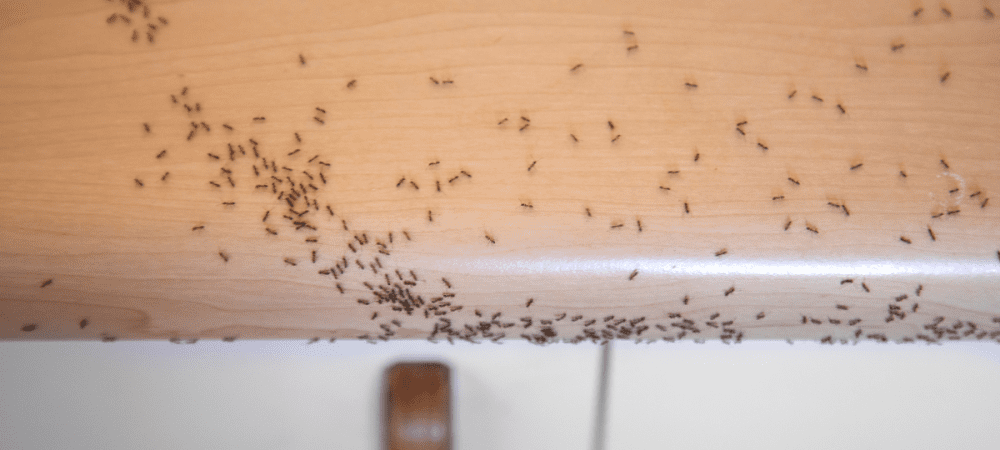
Every June, Olympia homeowners notice a familiar and frustrating pattern: ants taking over the kitchen. It’s a seasonal issue across Thurston County, and it doesn’t just affect one or two households. Whether it’s just a few ants or a full infestation, this annual invasion is one of the most common pest problems in our region.
So, why does it always happen in June?
This article breaks down the seasonal triggers, what makes your kitchen a prime target, and what you can do to get ahead of the issue.
Key Takeaways
- June is when ants become more active and start looking for food in homes across Olympia and Thurston County.
- Kitchens give ants what they need, including crumbs, water, and entry points from crawl spaces or cracks in walls.
- Keeping ants away means deep cleaning, sealing gaps, fixing leaks, and knowing which type of ants are inside.
- PCI Pest Control helps Olympia homeowners with free inspections, clear answers, and plans that stop ants for good.
June Triggers Growth in Ant Colonies
In Washington State, late spring to early summer is when many ant species enter their reproductive stage. As colonies expand, scout ants go on the hunt for food and safe nesting areas.
Your kitchen, especially if you leave even tiny food particles behind, becomes the perfect place to start a new colony.
This surge in activity often includes black ants, sugar ants, odorous house ants, and moisture ants.
Olympia Kitchens Provide Easy Access to Food and Water
With warm days and cool nights, Olympia’s climate makes ants look for steady shelter indoors.. Kitchens often provide both moisture and consistent food sources.
Crumbs behind appliances, damp dish rags, and leaking fixtures all make your home attractive to ants. Even eco-friendly cleaners may not erase scent trails ants leave behind for others to follow.
Cracks and Gaps Serve as Entry Points
Ants are persistent, especially when there’s food involved.
Many Olympia homes have older foundations, window frames, or siding that shift with the seasons. These tiny openings become easy entry points for ants and other critters like termites and even wasps.
When those structural gaps align with a kitchen’s proximity to a crawl space, it’s a recipe for recurring pest issues.
Outdoor Disturbances Push Ants Indoors
Pavement ants and carpenter ants are often forced indoors when their outdoor habitats are disrupted by construction, heavy rainfall, or even a backyard project. If their nest is compromised, they’ll relocate quickly, often into nearby kitchens.
Homes near landscaping projects or in areas with clay-rich soil are particularly vulnerable.
Seasonal Conditions Draw Ants From Surrounding Areas
Our corner of the Pacific Northwest, from Seattle to Lacey, is a hotspot for several ant species. But it’s not just about ants. When homeowners notice an activity, they often also report increased sightings of other common pests like bed bugs and fire ants.
June is the time when infestations overlap, creating a perfect storm for pest control services to be in high demand.
What to Do When You See Ants in Your Olympia Kitchen
To truly stop an ant infestation in its tracks and prevent future problems, you need a targeted, step-by-step approach. Here’s what you should do the moment you see them crawling through your kitchen this June:
Identify the Type of Ant You’re Dealing With
Knowing whether you have odorous house ants, carpenter ants, or pavement ants makes a huge difference. Some ants are just a nuisance.
Others, like carpenter ants, can cause long-term structural damage.
Black ants and moisture ants behave differently as well.
Here’s a quick comparison to help you understand what type of ant you might be seeing:
| Ant Type | Behavior | Threat Level |
|---|---|---|
Odorous House Ants | Attracted to sweets | Nuisance, no damage |
Carpenter Ants | Nest in wood, cause damage | Structural threat |
Pavement Ants | Nest in soil, seek food | Low threat |
Moisture Ants | Prefer damp areas | Indicates water issues |
Professional pest control can help with proper identification, which is crucial for effective extermination.
Deep-Clean to Erase Trails and Eliminate Food Sources
Your typical cleaning routine may not be enough.
Ants use pheromone trails to communicate, and these trails linger even after the food is gone. Clean with a vinegar-based solution or soapy water to erase trails.
Be sure to clean under the stove, around pet bowls, and even inside trash bins.
Close Up Entry Points Around the Home
Inspect your home’s exterior for cracks, especially near pipes and electrical lines. Inside, look for gaps in the trim, window sills, and door frames. If your kitchen sits above a crawl space, ensure it’s dry and well-ventilated.
Sealing these off is one of the best preventative measures you can take to avoid another infestation.
Address Moisture Issues Quickly
Ants, like many pests, are drawn to water.
Don’t leave wet sponges, unwashed dishes, or dripping faucets overnight. Use a dehumidifier in damp areas and consider upgrading kitchen ventilation if it’s frequently humid.
Don’t Rely Solely on DIY Methods
While DIY traps may reduce numbers, they rarely solve the root problem. If ants keep returning or if you suspect a nest inside your walls, it’s time to call a pest control company.
At PCI Pest Control, our professional pest control team offers free inspections to identify ant species, find their entry points, and create a treatment plan that fits your home.
Whether it’s a minor ant problem or signs of multiple pest infestations, we’ll deliver peace of mind with proven pest management solutions.
If you’re ready to enjoy a pest-free summer, give us a call. No contracts. Just real results.
We’ll answer your questions, offer a free quote, and guide you through your options for ant control services.
Call us today and reclaim your kitchen before another ant colony does.
 to walk you through your pest control plan.
